

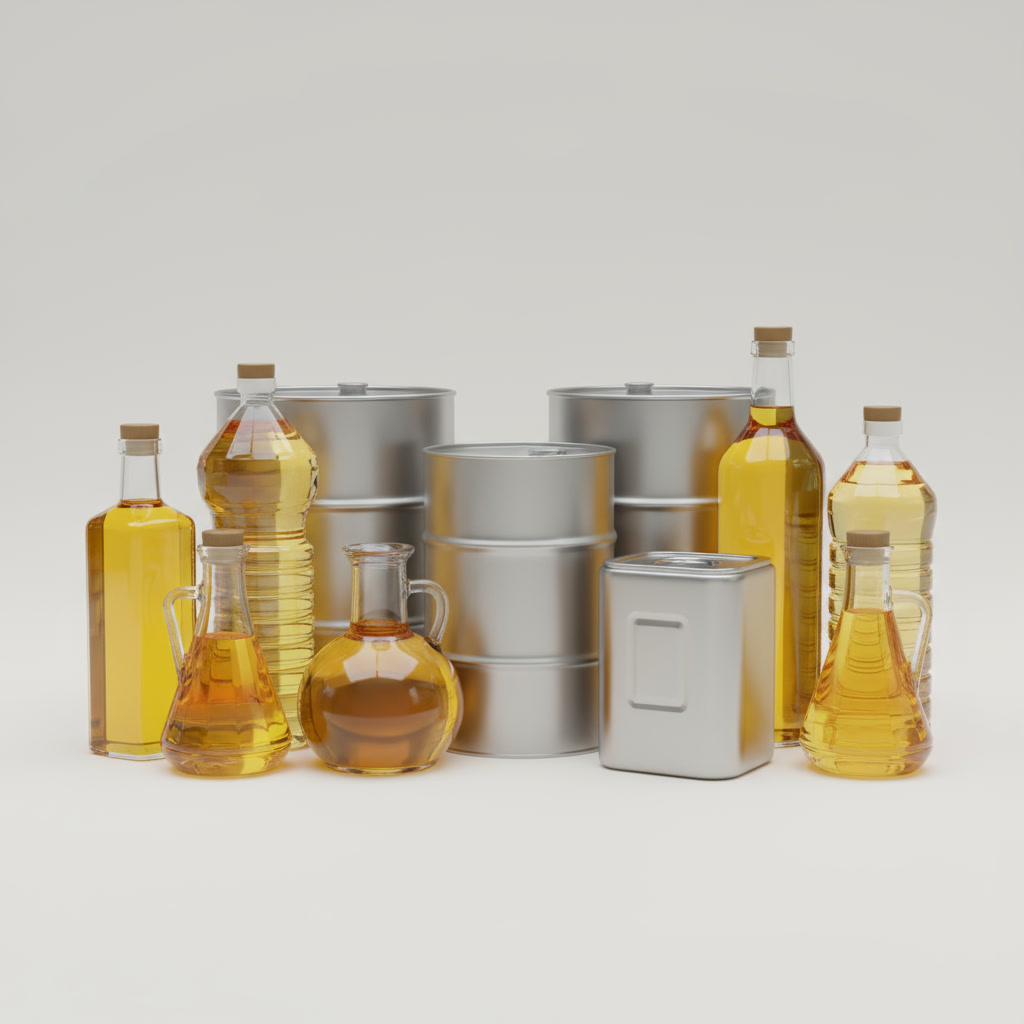
Edible Oils Distribution: Palm, Sunflower, and Soya Bean Oil for International Markets
Introduction: The Global Edible Oils Market
The global edible oils and fats market represents a $200 billion industry essential to food security, culinary traditions, and industrial applications worldwide. From cooking oils in household kitchens to industrial food processing, cosmetics manufacturing, and biofuel production, edible oils serve diverse and critical functions across multiple sectors.
This comprehensive guide examines the procurement and distribution of three major edible oils—palm oil, sunflower oil, and soya bean oil—along with their companion commodities yellow corn and soya beans. For food manufacturers, distributors, retailers, and institutional buyers, understanding quality specifications, sourcing strategies, and logistics requirements is fundamental to securing reliable supplies at competitive prices.
Palm Oil: Production, Specifications, and Sustainability
Palm oil is the world’s most widely produced vegetable oil, accounting for approximately 40% of global edible oil supply. Extracted from the fruit of oil palm trees cultivated primarily in tropical regions, palm oil’s versatility, high yield per hectare, and favorable economics have made it indispensable to modern food systems.
Types of Palm Oil
Palm oil is available in several forms, each suited to specific applications:
- Crude Palm Oil (CPO): Unrefined oil with reddish color from carotenoids, requires refining for most food applications
- Refined, Bleached, Deodorized (RBD) Palm Oil: Most common form for food manufacturing, neutral flavor and color
- RBD Palm Olein: Liquid fraction, ideal for frying and cooking applications in tropical climates
- RBD Palm Stearin: Solid fraction, used in margarine, shortening, and non-food applications
- Palm Kernel Oil: Extracted from palm kernel, different fatty acid profile, used in cosmetics and specialty foods
Each type has distinct melting points, stability characteristics, and cost profiles. Buyers must specify the exact palm oil type matching their production requirements and climate conditions.
Quality Specifications for RBD Palm Oil
Standard specifications for refined palm oil include:
- Free Fatty Acids (FFA): Maximum 0.1%, indicating proper refining and freshness
- Moisture and Impurities: Maximum 0.1%, ensuring stability and shelf life
- Iodine Value: 50-55, measuring degree of unsaturation
- Color: Maximum 3.0 Red (Lovibond), indicating complete bleaching
- Peroxide Value: Maximum 2.0 meq/kg, measuring oxidative stability
- Slip Melting Point: 33-39°C for RBD palm oil, varying by fraction
These parameters ensure palm oil performs consistently in food manufacturing, maintains stability during storage and transportation, and meets regulatory requirements in destination markets.
Sustainability and Certification
Palm oil production has faced scrutiny regarding environmental impact, particularly deforestation and biodiversity loss. In response, industry stakeholders developed sustainability certification programs:
- RSPO (Roundtable on Sustainable Palm Oil): Most recognized certification, verifying sustainable production practices
- ISPO (Indonesian Sustainable Palm Oil): Indonesian government certification program
- MSPO (Malaysian Sustainable Palm Oil): Malaysian national certification scheme
- Organic Certifications: USDA Organic, EU Organic for premium markets
Major food companies increasingly require RSPO or equivalent certification from suppliers. Buyers should verify certification claims through official registries and ensure traceability to certified mills. Sustainable palm oil commands premium pricing but provides market access and supports corporate sustainability commitments.
Sunflower Oil: Specifications and Health Benefits
Sunflower oil ranks among the most popular cooking oils globally, valued for its light flavor, high smoke point, and favorable nutritional profile. Produced primarily in Ukraine, Russia, Argentina, and the European Union, sunflower oil serves both retail and industrial markets with diverse applications.
Sunflower Oil Varieties
Sunflower oil is classified by oleic acid content, which affects stability and nutritional characteristics:
- Standard Linoleic Sunflower Oil: High in polyunsaturated fatty acids (60-70% linoleic acid), requires careful handling to prevent oxidation
- Mid-Oleic Sunflower Oil: Balanced fatty acid profile (55-75% oleic acid), improved stability
- High-Oleic Sunflower Oil: Predominantly monounsaturated (minimum 80% oleic acid), excellent stability, premium pricing
High-oleic varieties have gained market share due to superior oxidative stability, making them ideal for frying and extended shelf-life applications. However, standard linoleic sunflower oil remains widely used and more economically priced.
Refined Sunflower Oil Specifications
Quality parameters for refined sunflower oil:
- Free Fatty Acids: Maximum 0.1-0.2%, ensuring freshness and proper refining
- Peroxide Value: Maximum 2.0 meq/kg, critical for oxidative stability
- Moisture and Volatiles: Maximum 0.1%, preventing microbial growth and foaming
- Color: Light yellow, typically 10-20 on Lovibond yellow scale
- Flavor and Odor: Bland, neutral, without rancidity or foreign odors
- Smoke Point: Minimum 220°C for refined oil, supporting high-temperature cooking
Sunflower oil’s light flavor and high smoke point make it versatile for salad dressings, baking, frying, and industrial food production. Its nutritional profile—low in saturated fats and containing vitamin E—appeals to health-conscious consumers.
Market Dynamics and Supply Considerations
Sunflower oil supply can be volatile due to concentration in the Black Sea region. Recent geopolitical events affecting Ukraine and Russia—together accounting for over 60% of global sunflower oil exports—have created supply chain challenges and price volatility.
Procurement strategies for managing sunflower oil supply:
- Diversified Origins: Source from multiple regions including Argentina, EU, Turkey to reduce dependency
- Strategic Inventory: Maintain buffer stocks during periods of supply uncertainty
- Flexible Formulations: Develop product recipes that can substitute alternative oils if necessary
- Forward Contracting: Lock in supplies during harvest season at favorable pricing
Working with trading partners who maintain relationships across multiple origins provides supply security and pricing flexibility during market disruptions.
Soya Bean Oil: Multi-Industry Applications
Soya bean oil is the second most consumed vegetable oil globally, extracted from soya beans grown primarily in the United States, Brazil, and Argentina. Its versatility, nutritional properties, and competitive pricing have established it as a staple in food service, industrial processing, and increasingly in biofuel production.
Soya Bean Oil Production Process
Soya bean oil is produced through solvent extraction from crushed soya beans, yielding approximately 18-20% oil content. The remaining soya bean meal is a high-protein feed ingredient for livestock, creating integrated commodity markets where oil and meal prices influence each other.
Processing stages:
- Crushing: Soya beans cleaned, cracked, dehulled, and flaked
- Extraction: Hexane solvent extracts oil from flakes
- Refining: Degumming, neutralization, bleaching, deodorization produce refined oil
- Modification: Optional hydrogenation or interesterification for specific applications
Fully refined soya bean oil provides neutral flavor and functional properties suitable for diverse applications from salad dressings to industrial frying operations.
Quality Specifications
Standard specifications for refined soya bean oil:
- Free Fatty Acids: Maximum 0.05-0.1% as oleic acid
- Peroxide Value: Maximum 2.0 meq/kg
- Color: Light yellow, maximum 2.0 Red, 20 Yellow (Lovibond)
- Iodine Value: 124-139, indicating degree of unsaturation
- Moisture and Volatiles: Maximum 0.1%
- Flash Point: Minimum 254°C, ensuring safe handling
These specifications ensure soya bean oil delivers consistent performance across applications while maintaining shelf stability and regulatory compliance.
Applications Across Sectors
Soya bean oil serves multiple industries:
- Food Service: Cooking, frying, salad dressings, mayonnaise, commercial baking
- Industrial Food Processing: Margarine, shortening, prepared foods, snack manufacturing
- Retail Packaging: Consumer cooking oil for home use
- Biodiesel Production: Renewable fuel feedstock, growing market segment
- Industrial Applications: Printing inks, lubricants, plasticizers, coatings
The biodiesel sector’s growth has created additional demand for soya bean oil, influencing pricing dynamics and creating opportunities for suppliers serving energy markets alongside food applications.
Yellow Corn and Soya Beans: Complementary Commodities
Yellow corn and soya beans represent foundational agricultural commodities with extensive applications in food, feed, and industrial sectors. Understanding these bulk grains is essential for edible oils buyers, as they form integrated supply chains with oil production and serve overlapping markets.
Yellow Corn: Specifications and Uses
Yellow corn is graded based on moisture content, damaged kernels, foreign material, and broken corn content. Quality standards vary by destination market and intended use:
- Feed-Grade Corn: Primary use in livestock and poultry feed, less stringent quality requirements
- Food-Grade Corn: Suitable for human consumption products including cornmeal, grits, corn flour
- Industrial Corn: Ethanol production, corn starch, corn syrup manufacturing
Standard quality parameters:
- Moisture: Maximum 14% for safe storage and export
- Damaged Kernels: Maximum 2-5% depending on grade
- Foreign Material: Maximum 1-2%
- Test Weight: Minimum 56-60 lbs/bushel indicating kernel quality
Major exporters include the United States, Brazil, Argentina, and Ukraine. Corn supply and pricing significantly impact livestock production costs globally, creating interdependencies with meat, dairy, and egg markets.
Soya Beans: Whole Bean Trade
Whole soya beans are traded internationally for crushing into oil and meal, direct food applications (tofu, soy milk, edamame), and feed uses. Quality is assessed based on:
- Moisture Content: Maximum 13-14% for storage stability
- Protein Content: Typically 34-40% on dry basis, affects crushing value
- Oil Content: 18-20%, determines oil extraction yield
- Foreign Material: Maximum 1-2%
- Damaged Beans: Maximum 2-3% for premium grades
Soya bean markets are highly liquid and globally integrated, with pricing influenced by crop forecasts, crushing margins, meal demand from livestock sectors, and competition between food and biofuel uses. Buyers often purchase both whole beans for crushing and finished soya bean oil, optimizing based on relative economics.
Streamlined Logistics: From Production to Your Warehouse
Efficient logistics management is critical to edible oils and grains distribution. These bulk commodities require specialized handling, storage, and transportation to maintain quality while optimizing costs and delivery times.
Packaging and Transportation Modes
Edible oils are transported in multiple configurations:
- Bulk Tankers: Large ocean tankers for volumes exceeding 10,000 MT, most economical for major buyers
- Flexitanks: Food-grade bladders inside standard 20ft containers, 16-24 MT capacity, flexible and cost-effective
- ISO Tank Containers: Reusable stainless steel tanks, 20-26 MT capacity, suitable for smaller shipments
- Drums and IBCs: 200L drums or 1000L intermediate bulk containers for small volumes or sampling
Grains utilize different transport methods:
- Bulk Vessels: Capesize, Panamax, or Handysize ships for large volumes
- Container Shipping: Standard 20ft/40ft containers for moderate quantities
- Bagged Cargo: 25-50kg bags for retail distribution or smaller buyers
Transportation mode selection balances cost, volume, delivery timeline, and destination infrastructure. Experienced logistics partners optimize these variables while ensuring product integrity throughout transit.
Storage Requirements and Shelf Life
Proper storage preserves edible oil quality:
- Temperature Control: Cool storage (15-20°C ideal) slows oxidation and extends shelf life
- Light Protection: Dark storage or opaque containers prevent photo-oxidation
- Oxygen Exclusion: Nitrogen blanketing in tanks minimizes oxidative degradation
- Clean Facilities: Food-grade storage preventing contamination and off-flavors
- Regular Quality Checks: Periodic testing of peroxide value and free fatty acids
Under proper conditions, refined edible oils maintain quality for 12-24 months. High-oleic varieties show superior stability, potentially extending to 36 months. Grains require moisture-controlled storage preventing mold growth and insect infestation.
Delivery Efficiency and Just-in-Time Logistics
Large-scale distribution of edible oils and grains requires streamlined logistics ensuring efficient delivery from production facilities directly to designated warehouses. Working with trading partners who manage end-to-end logistics provides several advantages:
- Single Point of Contact: One partner coordinates shipping, customs, and delivery
- Inventory Optimization: Scheduled deliveries align with production requirements, minimizing working capital
- Quality Assurance: Continuous chain of custody maintaining product integrity
- Documentation Management: Comprehensive paperwork supporting customs clearance and regulatory compliance
- Contingency Planning: Experienced partners anticipate and resolve logistics challenges proactively
Effective logistics management reduces total landed costs, ensures supply continuity, and allows buyers to focus on their core business operations with confidence that commodity procurement is professionally handled.
Conclusion: Building Reliable Edible Oils Supply Chains
Sourcing edible oils and complementary grains requires understanding product specifications, market dynamics, sustainability considerations, and logistics complexities. As global food demand grows, supply chains face ongoing challenges from climate variability, geopolitical events, and evolving consumer preferences.
Success in edible oils procurement depends on verified suppliers maintaining quality certifications, comprehensive testing and documentation, sustainable sourcing practices meeting corporate commitments, flexible logistics supporting efficient delivery, and trading partners providing transparency, reliability, and market expertise.
Whether sourcing palm oil for food manufacturing, sunflower oil for retail distribution, soya bean oil for industrial applications, or yellow corn and soya beans for integrated operations, working with experienced distributors who understand both technical and commercial aspects positions your organization for long-term success in dynamic global markets.
Get Bulk Edible Oils Quote
Kurt Global Sourcing provides large-scale distribution of edible oils and grains with streamlined logistics from production facilities to your warehouse. Our comprehensive services ensure quality, sustainability, and delivery reliability.
Our edible oils and grains portfolio includes:
- Refined palm oil (RBD Palm Olein and Stearin) with RSPO certification options
- Sunflower oil (standard linoleic, mid-oleic, high-oleic varieties)
- Refined soya bean oil for food and industrial applications
- Yellow corn (feed-grade and food-grade) from certified suppliers
- Whole soya beans for crushing or direct use
- Flexible packaging: bulk tankers, flexitanks, ISO tanks, or containerized
- Complete documentation supporting LOI and CIS requirements
- End-to-end logistics management ensuring timely delivery
Contact our edible oils team.



Related Posts

Building Resilient Supply Chains: Strategic Commodity Sourcing for 2026 and Beyond
Sourcing Premium Agricultural Commodities: Wheat, Sugar, and Rice at Scale