

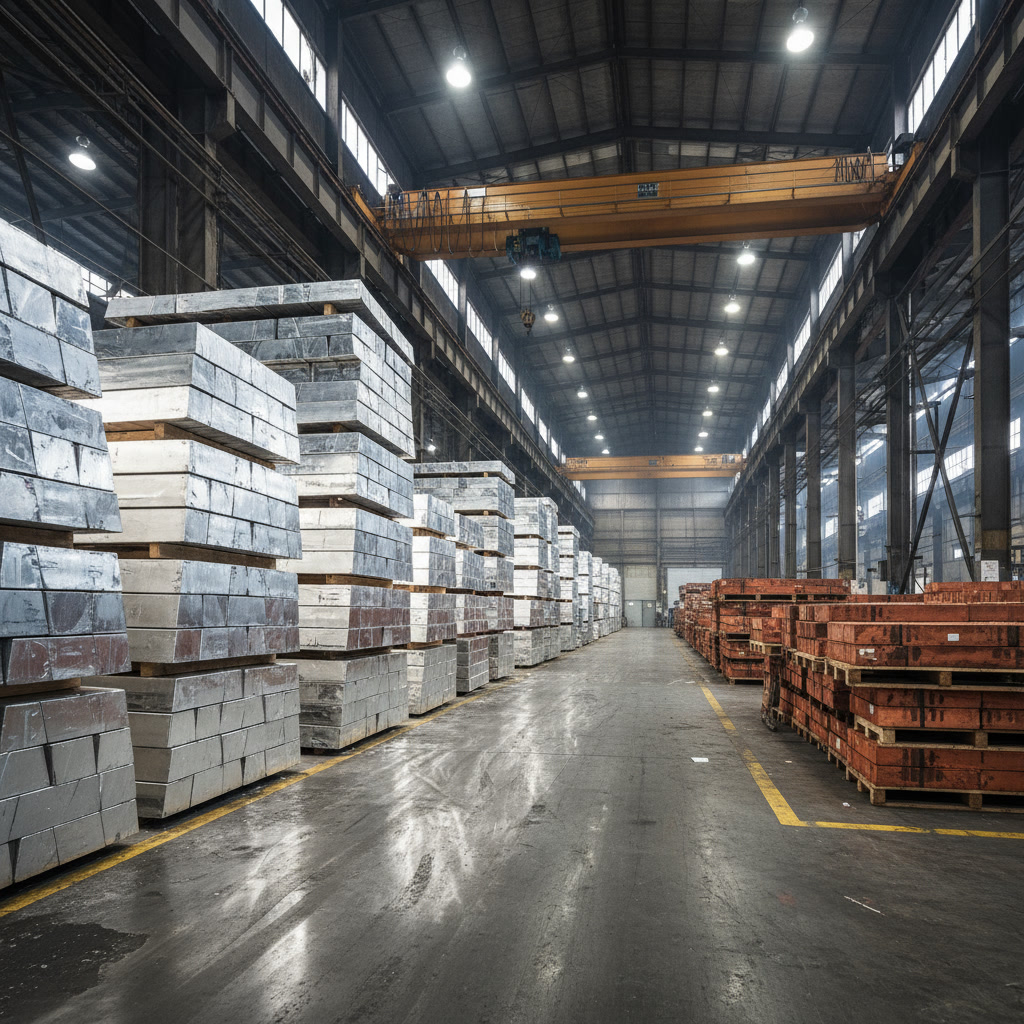
Industrial Metals Procurement: Aluminum Ingots and Copper Cathodes for Global Buyers
Introduction: The $500 Billion Industrial Metals Market
Industrial metals form the backbone of modern manufacturing, construction, and technology sectors. From aerospace components to electrical infrastructure, automotive manufacturing to renewable energy systems, high-purity metals are essential inputs that directly impact production quality, efficiency, and reliability.
The global industrial metals market exceeds $500 billion annually, with aluminum and copper representing two of the most critical and widely traded materials. For manufacturers, construction companies, technology firms, and trading houses, securing consistent supplies of high-quality aluminum ingots and copper cathodes at competitive prices is fundamental to operational success and profitability.
Aluminum Ingots: Specifications and Applications
Aluminum is the second most widely used metal globally, valued for its light weight, corrosion resistance, electrical conductivity, and recyclability. Primary aluminum ingots serve as the raw material for countless manufacturing processes, from extruding profiles to casting engine blocks.
Standard Aluminum Ingot Specifications
Primary aluminum ingots are produced to internationally recognized specifications, with purity levels determining suitability for different applications:
- Aluminum Content: Minimum 99.7% for standard grade (A7), with premium grades reaching 99.85% or higher
- Silicon: Maximum 0.10-0.20% depending on grade
- Iron: Maximum 0.15-0.20%
- Copper: Maximum 0.01-0.03%
- Other Elements: Zinc, manganese, magnesium, titanium each typically below 0.01-0.05%
- Physical Form: Typically 20-25kg ingots, stacked on pallets for efficient handling and shipping
These specifications align with international standards including ASTM B179, EN 576, and similar national standards. Buyers should verify the specific grade designation (A5, A7, A7E, A8, etc.) matches their production requirements, as trace element variations significantly affect final product properties.
Applications Across Industries
Aluminum ingots serve diverse industrial applications:
- Aerospace Manufacturing: Aircraft structures, engine components, requiring highest purity grades for strength-to-weight optimization
- Automotive Industry: Engine blocks, transmission housings, wheels, body panels for lightweighting and fuel efficiency
- Construction and Architecture: Window frames, curtain walls, roofing, structural components for corrosion resistance
- Electrical Industry: Conductors, busbars, transformer windings leveraging excellent conductivity
- Packaging: Beverage cans, foil, food packaging requiring non-toxic, recyclable material
- Renewable Energy: Solar panel frames, wind turbine components, supporting green technology expansion
Global aluminum consumption exceeds 65 million metric tons annually, with demand projected to grow 3-4% yearly through 2030, driven by electrification trends, renewable energy infrastructure, and lightweighting initiatives across transportation sectors.
Primary vs. Secondary Aluminum
Understanding the distinction between primary and secondary aluminum helps buyers make informed sourcing decisions:
- Primary Aluminum: Produced from bauxite ore through electrolytic reduction, highest purity, premium pricing, required for critical applications
- Secondary Aluminum: Recycled from scrap, lower cost, suitable for many applications but may contain higher impurity levels
This guide focuses on primary aluminum ingots, which offer the consistency, purity, and performance characteristics demanded by industries requiring certified materials with predictable properties. While recycled aluminum plays an important environmental role, applications demanding precise alloy chemistry typically specify primary material.
Copper Cathodes: Purity Standards and Uses
Copper stands as one of humanity’s most essential industrial metals, with electrical conductivity second only to silver and excellent thermal properties making it irreplaceable in countless applications. Copper cathodes represent the purest form of refined copper available in commodity markets, serving as the primary input for wire, tube, and alloy production.
Copper Cathode Purity Requirements
High-purity copper cathodes meet exacting specifications that ensure optimal electrical and thermal performance:
- Copper Content: Minimum 99.99% (Grade A cathodes), with some applications requiring 99.995% or higher
- Silver: Typically 10-100 ppm, valued impurity that enhances some properties
- Sulfur: Maximum 15-20 ppm, higher levels impair electrical conductivity
- Oxygen: Maximum 10-50 ppm depending on grade
- Other Impurities: Lead, iron, antimony, arsenic each below 5 ppm
- Physical Form: Flat plates typically 80-120kg each, bundled for shipping, smooth surface facilitating downstream processing
Copper cathode specifications follow international standards including ASTM B115, EN 1978, and London Metal Exchange (LME) Good Delivery specifications. LME registration is particularly important for buyers requiring delivery against futures contracts or using cathodes as collateral in commodity financing.
Critical Applications of Copper Cathodes
Copper cathodes feed into applications where purity and conductivity are paramount:
- Electrical Wiring and Cables: Building wiring, power distribution, telecommunications requiring maximum conductivity
- Electronics Manufacturing: Printed circuit boards, semiconductors, connectors demanding ultra-high purity
- Electric Vehicles and Charging: Motors, batteries, charging infrastructure driving exponential demand growth
- Renewable Energy Systems: Solar panels, wind turbines, grid connections essential for energy transition
- Plumbing and HVAC: Pipes, tubes, heat exchangers leveraging corrosion resistance and thermal properties
- Alloy Production: Brass, bronze, specialty alloys requiring precisely controlled copper inputs
Global copper consumption approaches 26 million metric tons annually, with the International Copper Study Group projecting continued growth driven by electrification, renewable energy deployment, and digital infrastructure expansion. Electric vehicles alone require 2-3 times more copper than conventional vehicles, creating substantial long-term demand.
Electrolytic vs. Fire-Refined Copper
Copper cathodes are produced through electrolytic refining, which delivers superior purity compared to fire-refined copper:
- Electrolytic Copper: 99.99%+ purity achieved through electrochemical deposition, industry standard for demanding applications
- Fire-Refined Copper: 99.0-99.5% purity from traditional smelting, lower cost but limited applications
This discussion focuses exclusively on electrolytic copper cathodes, as they represent the quality standard expected in international trade and are required for electrical and electronics applications where conductivity is critical.
Understanding MOQ: Why 12,500 MT Matters
Minimum Order Quantities (MOQ) in industrial metals trading typically range from 5,000 to 25,000 metric tons, with 12,500 MT representing a common benchmark. Understanding why these substantial volumes are standard helps buyers plan procurement strategies and evaluate supplier capabilities.
Economic Factors Driving MOQ Requirements
Large MOQs reflect several economic realities:
- Smelter Production Runs: Primary aluminum smelters and copper refineries operate continuously, with production batches measured in thousands of tons
- Shipping Economics: Bulk carriers and container vessels achieve optimal freight rates at full loads, typically 10,000+ MT
- Quality Consistency: Larger lots from single production runs ensure uniform specifications across the shipment
- Trading House Operations: Working capital requirements and risk management favor substantial transactions
- Financial Instruments: Letters of Credit and banking procedures involve fixed costs better amortized over larger values
At current market prices (approximately $2,500/MT for aluminum and $9,000/MT for copper), a 12,500 MT order represents $31-112 million in transaction value. These are substantial commitments requiring significant working capital, robust credit facilities, and sophisticated supply chain management.
Strategies for Managing Large MOQs
Buyers can employ several strategies to work effectively within MOQ constraints:
- Consortium Purchasing: Multiple buyers pool requirements to meet MOQ, sharing logistics and financing
- Scheduled Deliveries: Commit to full MOQ but arrange staggered shipments over several months
- Strategic Inventory: Build inventory during favorable pricing, drawing down over time
- Distribution Partnerships: Work with established distributors who maintain inventory and sell smaller quantities
- Commodity Financing: Utilize specialized financing products designed for metals procurement
For manufacturers with substantial ongoing requirements, meeting MOQs poses less challenge. Those with smaller or irregular needs should explore distribution relationships or trading houses offering flexible quantities at slightly higher per-unit prices.
SPOT Contracts vs. Long-Term Agreements
Industrial metals procurement typically utilizes two primary contract structures, each offering distinct advantages and trade-offs. Understanding when to employ SPOT purchases versus long-term agreements is crucial to optimizing procurement strategy.
SPOT Market Contracts
SPOT contracts involve purchasing metals for immediate delivery at current market prices, typically settling within 2-30 days:
Advantages of SPOT purchasing:
- Market Timing: Capitalize on favorable price movements and temporary market dips
- Flexibility: No long-term commitment allows adapting to changing business needs
- Competitive Pricing: Multiple suppliers compete for each transaction
- Inventory Management: Buy only when needed, minimizing working capital tied to inventory
Disadvantages of SPOT purchasing:
- Price Volatility: Full exposure to market price swings complicates budgeting
- Supply Uncertainty: No guaranteed availability during tight market conditions
- Administrative Burden: Each transaction requires separate negotiation and documentation
- Premium Pricing: May pay higher prices during supply shortages or urgent needs
SPOT contracts work well for buyers with irregular requirements, those seeking to exploit favorable market conditions, or companies supplementing long-term contracts with opportunistic purchases.
Long-Term Supply Agreements
Long-term contracts establish ongoing supply relationships, typically 6-36 months, with predetermined volumes and pricing mechanisms:
Advantages of long-term agreements:
- Supply Security: Guaranteed availability ensures production continuity
- Price Stability: Fixed prices or formulas reduce budget uncertainty
- Preferential Terms: Volume commitments often secure better pricing and service
- Simplified Administration: One agreement covers multiple deliveries
- Relationship Development: Deeper supplier relationships enable customized solutions
Disadvantages of long-term agreements:
- Reduced Flexibility: Committed to taking agreed volumes regardless of changing needs
- Opportunity Cost: May miss better pricing if markets decline significantly
- Counterparty Risk: Supplier financial problems or operational issues affect your supply
Long-term agreements suit manufacturers with predictable requirements, those prioritizing supply security over price optimization, or buyers seeking to lock in favorable pricing during market upswings. Many sophisticated procurement strategies combine both approaches: long-term contracts covering base load requirements supplemented by SPOT purchases for flexibility.
Quality Verification and Testing Protocols
Quality assurance in metals procurement relies on rigorous testing and independent verification. Unlike agricultural or energy commodities where quality may degrade during storage or transport, metal quality is established at production and verified through scientific analysis.
Pre-Shipment Testing Procedures
Comprehensive quality control involves multiple verification stages:
- Producer Testing: Smelters and refineries conduct in-house analysis on production batches
- Independent Laboratory Analysis: Third-party labs verify chemical composition using spectroscopy and other methods
- Physical Inspection: Visual examination checking for defects, contamination, proper marking
- Weight Verification: Certified scales confirm quantity matches documentation
- Sampling Protocols: Representative samples drawn according to international standards (ISO, ASTM)
Reputable trading partners engage internationally recognized inspection agencies such as SGS, Bureau Veritas, Intertek, or Alex Stewart to provide independent verification. These inspection certificates provide critical assurance and are often required by banks for Letter of Credit transactions.
Understanding Certificates and Documentation
Proper documentation protects buyers and facilitates transactions:
- Certificate of Analysis (COA): Detailed chemical composition for each lot, showing all elements and purity levels
- Certificate of Origin: Documents production country and facility, important for tariff classification
- Weight Certificate: Certified weighing results from independent surveyor
- Packing List: Detailed inventory of ingots or cathodes, bundle numbers, packaging details
- LME Certificates: For LME-registered brands, warrants proving metal meets exchange specifications
These documents serve multiple purposes: customs clearance, quality verification, payment release under Letters of Credit, and legal protection in case of disputes. Buyers should verify all certificates are issued by recognized entities and contain complete, accurate information.
International Banking Procedures for Metal Trading
Given the substantial values involved in industrial metals transactions, secure payment mechanisms protecting both buyers and sellers are essential. International banking procedures provide frameworks that enable trade while managing counterparty risks.
Letters of Credit (LC)
Letters of Credit remain the most common payment method for international metals trading, offering protection to both parties:
How LCs work:
- Buyer’s bank issues LC guaranteeing payment upon presentation of specified documents
- Seller ships metals and obtains required documents (Bill of Lading, inspection certificates, etc.)
- Seller presents documents to advising/negotiating bank
- Banks verify documents match LC terms exactly
- Payment released to seller; buyer receives documents enabling cargo collection
LCs protect sellers against buyer non-payment and protect buyers against receiving incorrect or inferior goods. However, LCs require precise documentation—any discrepancy between documents and LC terms can delay payment or require amendments.
Alternative Payment Structures
Other payment methods used in metals trading:
- Documentary Collections: Bank acts as intermediary but doesn’t guarantee payment, lower cost than LC
- Bank Guarantees: Buyer’s bank guarantees payment against specific events or conditions
- Escrow Services: Third party holds payment until delivery and inspection confirmed
- Open Account: Direct payment after delivery, used only between established partners with strong trust
- Commodity Finance: Specialized lenders provide financing secured by the metal shipment itself
For initial transactions or when dealing with unfamiliar counterparties, LCs provide the highest security. Established relationships with proven track records may transition to more flexible payment terms over time, reducing banking fees and administrative burden.
Conclusion: Strategic Metal Procurement for Manufacturing Excellence
Industrial metals procurement requires sophisticated understanding of specifications, market dynamics, quality verification, and international trade procedures. As manufacturing becomes increasingly globalized and supply chains more complex, the ability to source high-quality aluminum ingots and copper cathodes reliably and cost-effectively provides competitive advantages.
Success in metals procurement depends on verified suppliers who maintain relationships with certified producers, comprehensive quality assurance including independent testing, secure banking procedures protecting transaction integrity, and trading partners who provide transparency, flexibility, and consistent performance.
Whether your requirements involve SPOT purchases for opportunistic buying or long-term agreements for supply security, working with experienced metals traders who understand both technical specifications and commercial realities positions your organization for success in the dynamic global metals market.
Request Metal Procurement Consultation
Kurt Global Sourcing provides reliable procurement of industrial metals backed by professional trading standards and verified international banking procedures.
Our industrial metals services include:
- Primary aluminum ingots (99.7%+ purity) from certified smelters
- Copper cathodes (99.99%+ purity) meeting LME specifications
- Flexible supply options: SPOT contracts or long-term agreements
- MOQ starting at 12,500 MT with competitive pricing
- Independent quality verification by recognized inspection agencies
- Complete documentation supporting customs clearance and LC transactions
- Logistics coordination from smelter to your facility
Contact our metals procurement team.



Related Posts

Navigating International Trade Compliance: LOI, CIS, and Certification Requirements